Force sensors, also known as load cells or force transducers, play a key role in addressing these challenges. By measuring force in real time and feeding that data into control systems, force sensors enable precise monitoring and adjustment of industrial processes. This article explores how force sensors contribute to process stability, the mechanisms behind their effectiveness, and best practices for implementation in automated systems.
Introduction
In modern industrial automation, achieving consistent, repeatable, and reliable production outcomes is essential. Manufacturers across industries—from automotive and electronics to packaging and energy—are under pressure to reduce variability, improve throughput, and maintain high product quality. At the heart of these goals lies a critical concept: process stability.
Process stability refers to the ability of a production system to maintain consistent performance over time, despite internal and external disturbances. Variations in material properties, tool wear, temperature changes, and machine dynamics can all introduce instability. Even small deviations in applied force can lead to defects such as improper fits, surface damage, or inconsistent product performance.
Understanding Process Stability in Automation
Process stability is a cornerstone of high-quality manufacturing. A stable process produces outputs that fall within defined tolerances with minimal variation. Stability is closely linked to concepts such as repeatability, reliability, and capability (often measured using indices like Cp and Cpk).
In automated systems, stability depends on consistent inputs and controlled interactions between machines, materials, and tools. Key factors include:
- Consistent application of force, torque, and displacement
- Predictable machine behavior and motion control
- Controlled environmental conditions
- Minimal drift over time
Without adequate sensing and feedback, systems can drift due to wear, misalignment, or changing conditions. Force sensors provide the missing visibility by capturing one of the most important physical variables—force—at the point of action.
![Force Sensors (1)]()
What Are Force Sensors and How Do They Work?
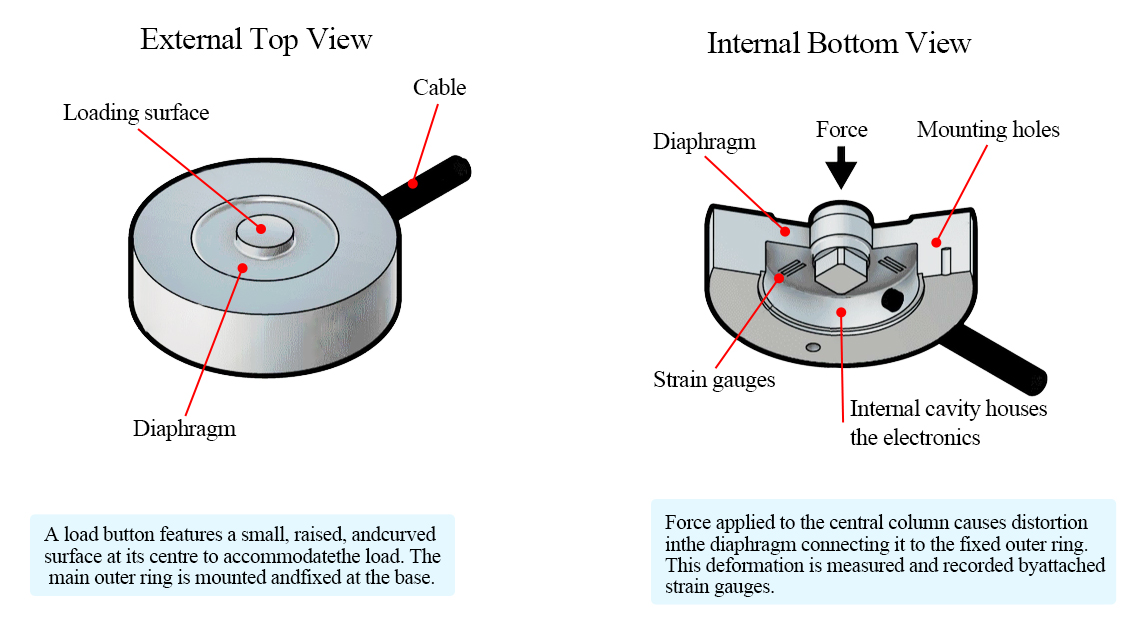
Force sensors measure applied load and convert it into an electrical signal that can be processed by controllers or data acquisition systems. The most common technology is strain gauge-based sensing, where a metallic element deforms slightly under load, causing a change in electrical resistance.
Typical force sensor characteristics include:
- Measurement type: compression, tension, or both
- Output: mV/V, 0–10 V, 4–20 mA, or digital (e.g., RS485, CAN)
- Accuracy class and repeatability
- Temperature compensation
- Overload protection
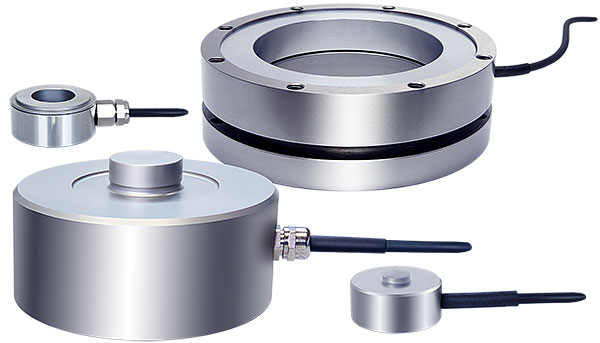
Depending on the application, sensors may be designed as button-type (for compression), S-type (for tension/compression), shear beam, or multi-axis sensors. In all cases, accurate installation and calibration are essential for reliable results.
![测力-英文]()
How Force Sensors Improve Process Stability
1. Real-Time Monitoring and Feedback
Force sensors provide continuous data about the forces applied during manufacturing. This allows immediate detection of deviations from setpoints. Operators or control systems can respond quickly, preventing defects from propagating down the line.
2. Closed-Loop Control Systems
In closed-loop control, sensor feedback is used to automatically adjust machine behavior. For example, a press can regulate its force output based on sensor readings, maintaining consistent results even as conditions change.
3. Reduction of Process Variability
By measuring and controlling force directly, manufacturers can reduce variability caused by materials, tooling, and environment. This leads to tighter tolerances and improved product consistency.
4. Early Detection of Tool Wear and Faults
Changes in force signatures can indicate tool wear, misalignment, or mechanical faults. Monitoring these trends enables predictive maintenance and reduces unplanned downtime.
5. Improved Safety and Compliance
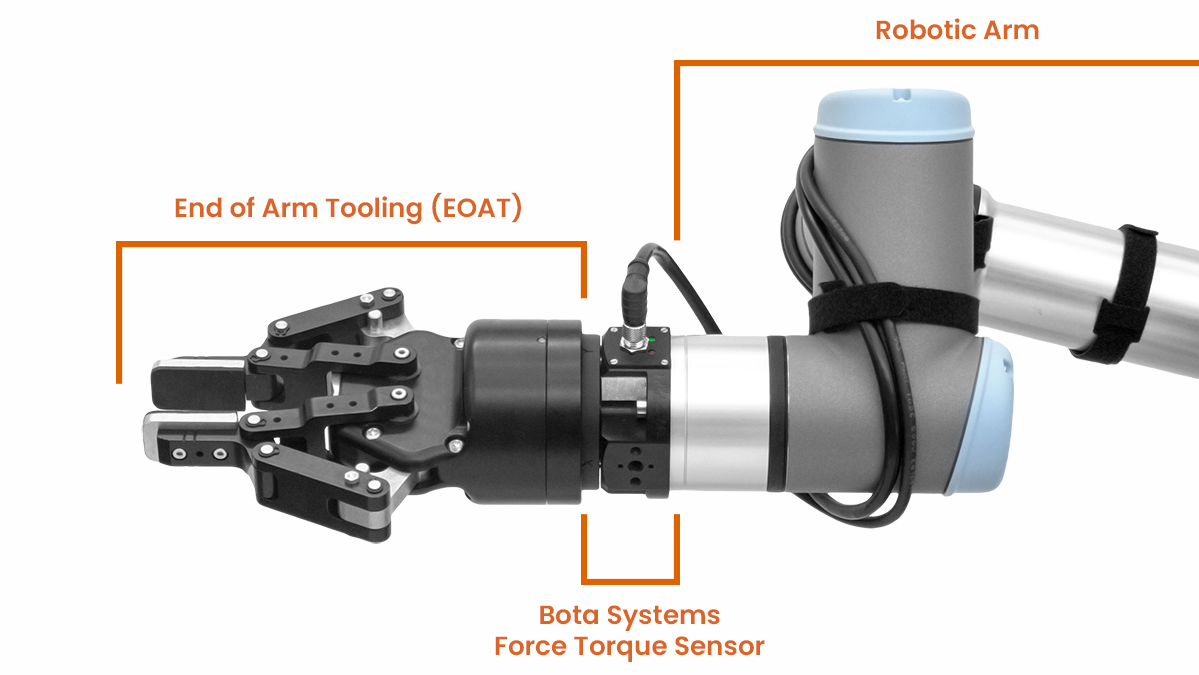
Force sensors help ensure that machines operate within safe limits, reducing the risk of overload or equipment damage. In collaborative robotics, force sensing is also essential for safe human-robot interaction.
![Force Sensors (3)]()
Applications in Industrial Automation
Force sensors are widely used across automated systems:
- Assembly and Press-Fit: Ensuring correct insertion force and detecting defects
- Robotics: Providing force feedback for precise manipulation
- Packaging: Controlling sealing force and product handling
- Material Testing: Measuring strength, compression, and tensile properties
- Weighing Systems: Monitoring load in tanks, conveyors, and platforms
Each application benefits from improved stability, reduced waste, and higher efficiency.
Best Practices for Implementation
To maximize the benefits of force sensors:
- Ensure proper mechanical installation (alignment, mounting surfaces)
- Calibrate regularly to maintain accuracy
- Select appropriate sensor capacity (typically 60–70% of full scale)
- Protect sensors from harsh environments (IP-rated enclosures)
- Integrate with suitable signal conditioning and control systems
Attention to these factors ensures reliable long-term performance.
Conclusion
Force sensors are indispensable tools for improving process stability in industrial automation. By enabling real-time monitoring, closed-loop control, and predictive maintenance, they help manufacturers achieve consistent quality and efficient operations. As automation technologies continue to evolve, the role of precise force measurement will only become more critical.
FAQ
1. What is a force sensor used for?
A force sensor measures applied load and provides data for monitoring and control.
2. How do force sensors improve stability?
They provide feedback that allows systems to detect and correct deviations.
3. What types of forces can be measured?
Compression, tension,static and dynamic forces.
4. Are force sensors suitable for high-speed systems?
Yes, modern sensors support high sampling rates.
5. Do force sensors require maintenance?
Minimal maintenance is needed, but calibration is recommended.