
Views: 222 Author: Leah Publish Time: 2025-03-11 Origin: Site


Content Menu
● Introduction to Fiber Tension Sensors
>> Importance of Fiber Tension Control
● Types of Fiber Tension Sensors
>> 4. Capacitive Tension Sensors
● Key Factors to Consider When Choosing a Fiber Tension Sensor
>> 1. Application Requirements
>> 2. Environmental Conditions
● Fiber Tension Sensors in Specific Applications
>> 2. Composite Material Production
● FAQ
>> 1. What is the primary function of a fiber tension sensor?
>> 2. What types of fiber tension sensors are available?
>> 3. How do environmental conditions affect fiber tension sensors?
>> 4. What factors should be considered when choosing a fiber tension sensor?
>> 5. Why is proper tension control important in fiber production?
Choosing the right fiber tension sensor is crucial for ensuring the quality and efficiency of various industrial processes, including textile manufacturing, composite material production, and fiber optic cable management. Fiber tension sensors are designed to measure the force or tension applied to fibers, which is essential for maintaining optimal production conditions and preventing damage to the fibers. In this article, we will explore the key factors to consider when selecting a fiber tension sensor and discuss the different types of sensors available.
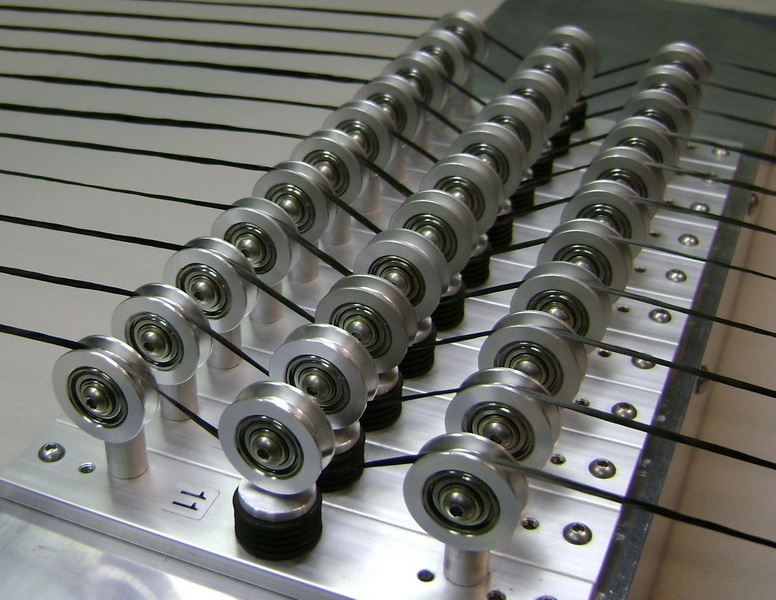
Fiber tension sensors are specialized devices used to monitor and control the tension in fibers. These sensors are vital in industries where fibers are used extensively, such as textiles, composites, and telecommunications. The primary function of a fiber tension sensor is to provide accurate measurements of the tension applied to the fibers, ensuring that they are not overstretched or under tension, which can lead to defects or breakage.
Proper tension control is essential for maintaining the quality of the final product. In textile manufacturing, for example, uneven tension can result in fabric defects such as puckering or distortion. Similarly, in composite material production, incorrect tension can lead to uneven distribution of stress, affecting the mechanical properties of the final product.
There are several types of fiber tension sensors available, each with its own advantages and applications.
Strain gauge sensors are widely used for measuring tension in fibers. They work by converting the mechanical strain into an electrical signal. These sensors are highly accurate and can be used in a variety of applications.
Load cells are another common type of sensor used for tension measurement. They are designed to measure the force applied to the fibers and can be integrated into various systems for real-time monitoring.
Optical tension sensors utilize fiber optic technology to measure tension. They are highly sensitive and can provide precise measurements in real-time. These sensors are ideal for applications where high accuracy is required.
Capacitive sensors measure tension by detecting changes in capacitance caused by the movement of the fibers. They are less common but offer advantages in certain applications due to their non-contact nature.
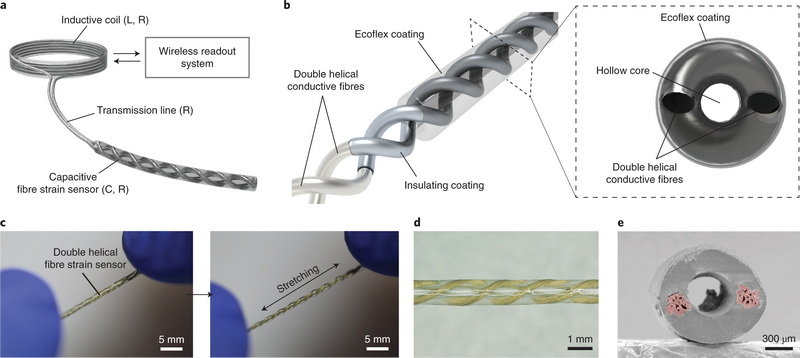
When selecting a fiber tension sensor, several factors must be considered to ensure that the chosen sensor meets the specific requirements of your application.
- Tension Range: Ensure the sensor can measure the expected tension range accurately.
- Accuracy: Determine the required level of precision for your application.
- Speed of Measurement: Decide if real-time monitoring is necessary or if intermittent measurements are sufficient.
- Temperature: Ensure the sensor operates effectively within the expected temperature range.
- Humidity: Consider sensors resistant to moisture if used in humid environments.
- Vibration and Dust: Choose sensors that can withstand vibrations and dust exposure if necessary.
- Sensitivity: Select a sensor that can detect small changes in tension accurately.
- Response Time: Ensure the sensor responds quickly enough for your application.
- Durability: Choose a sensor that can withstand the operational conditions.
Ensure the sensor is compatible with your existing equipment and systems. Consider the output type (analog, digital, fieldbus) and ensure it matches your control system requirements.
Fiber tension sensors are used in various industries, each with unique requirements.
In textile production, maintaining consistent tension is crucial for preventing fabric defects. Sensors like the DTH tension sensor are commonly used for monitoring and controlling tension in yarns and fibers.
For composite materials, controlling fiber tension is essential for ensuring uniform stress distribution and optimal mechanical properties. Sensors like strain gauges are often used in these applications.
In the telecommunications industry, fiber tension sensors are used to monitor and control the tension in fiber optic cables during installation and maintenance. This ensures that the fibers are not damaged by excessive tension.
Choosing the right fiber tension sensor is critical for ensuring the quality and efficiency of industrial processes. By understanding the application requirements, environmental conditions, sensor characteristics, and compatibility, you can select a sensor that meets your specific needs. Whether it's for textile manufacturing, composite material production, or fiber optic cable management, the correct fiber tension sensor can significantly improve product quality and operational efficiency.
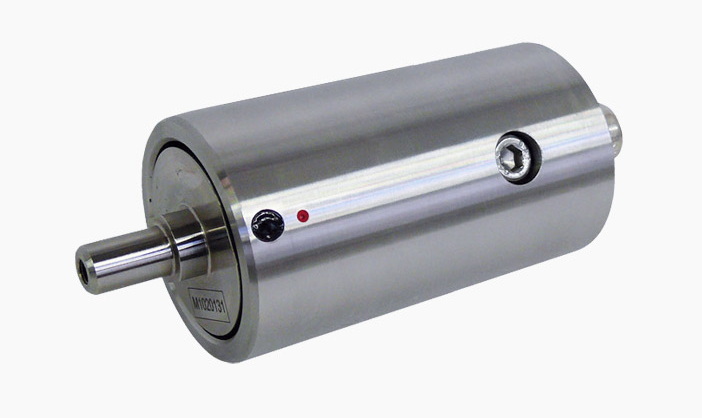
A fiber tension sensor is designed to measure the force or tension applied to fibers, ensuring they are not overstretched or under tension, which can lead to defects or breakage.
Common types include strain gauge sensors, load cells, optical tension sensors, and capacitive tension sensors. Each type has its own advantages and applications.
Environmental conditions such as temperature, humidity, vibration, and exposure to dust or chemicals can impact sensor performance. It's essential to choose sensors designed to withstand these conditions.
Key factors include application requirements (tension range, accuracy), environmental conditions, sensor characteristics (sensitivity, response time), and compatibility with existing systems.
Proper tension control ensures that fibers are not damaged and that the final product has uniform properties. Incorrect tension can lead to defects or reduced mechanical strength.
[1] https://www.xjcsensor.com/how-to-choose-the-right-tension-sensor-for-automation/
[2] https://lunainc.com/sites/default/files/assets/files/resource-library/TN_Applying-Strain-Sensors_FINAL.pdf
[3] https://www.hbkworld.com/en/knowledge/resource-center/articles/strain-measurement-basics/optical-strain-sensor-fundamentals/tips-for-configuring-optical-sensors
[4] https://www.cersa-mci.com/fiber-optic-measurement-and-control-tools/optical-fiber-tension-measuring-device-ntcm
[5] https://www.youtube.com/watch?v=27JU7AXMkY0
[6] https://www.idquantique.com/quantum-detection-systems/applications/fiber-optic-sensing/
[7] https://info.izumiinternational.com/monitoring-the-tension-of-fiber-for-composite-processes
[8] https://info.izumiinternational.com/the-importance-of-monitoring-the-tension-of-fibers
[9] https://www.xjcsensor.com/tension-sensors-manufacturers/
[10] https://www.arisewebguiding.com/what-are-different-types-of-tension-sensors-and-how-to-select-the-right-type
[11] https://www.checkline.com/product/TP
[12] https://info.izumiinternational.com/why-we-recommend-the-dth-fiber-tension-sensor
[13] https://www.hbm.com/1629/fiber-bragg-grating-technology-explained/?country=none
[14] https://www.atgrating.com/key-elements-in-choosing-fibre-optic-sensors.html
[15] https://fiberbroadband.org/wp-content/uploads/sites/2/2023/03/FOSA-Distributed-Fiber-Installation-Considerations-for-Structure-Monitoring.pdf
[16] https://standards.ieee.org/wp-content/uploads/import/governance/iccom/IC15-001_IEEE-SA_Fiber_Optics_Sensors.pdf
[17] https://www.fibossensor.com/how-to-choose-the-right-checkline-tension-sensor-for-your-application.html
[18] https://www.youtube.com/watch?v=DDa19wgS5Hc
[19] https://onlinelibrary.wiley.com/doi/full/10.1002/adpr.202100371
[20] https://www.shutterstock.com/search/fiber-sensor
[21] https://www.fjinno.net/fiber-optic-temperature-measurement-system-common-questions-and-answers
[22] https://www.checkline.com/product/TF
[23] https://www.somnisolutions.com/somni-faq
[24] https://www.youtube.com/watch?v=sYoDdMLgA6U
[25] https://www.frontiersin.org/journals/cellular-neuroscience/articles/10.3389/fncel.2021.685044/full
[26] https://www.fiberoptics4sale.com/blogs/archive-posts/95039622-guidelines-for-testing-and-troubleshooting-fiber-optic-installations-1
[27] https://ramcoi.s3.us-east-2.amazonaws.com/Omron/ZW-5000/ZW-7000_ZW-5000_UsersManual_troubleshooting_appendicies.pdf
[28] https://www.sensuron.com/faqs/
