You are here:Home » Blog » Top 20 Force Sensor Manufacturers for U.S. Buyers in 2026
Top 20 Force Sensor Manufacturers for U.S. Buyers in 2026
Views: 0 Author: Site Editor Publish Time: 2026-10-29 Origin: Site
Finding the right force sensor manufacturer starts with the measurement you need to make. A precision load cell for a test fixture, a six-axis transducer for a robot, and a thin-film sensor for an embedded device solve different problems. Their specifications, electronics, and integration costs need to be evaluated in that context.
This 2026 guide brings together 20 force sensor manufacturers for U.S. engineers, OEM teams, and industrial buyers to evaluate. It covers precision load measurement, miniature sensing, robotics, dynamic testing, and touch sensing. The list includes U.S. and overseas manufacturers; an entry does not establish U.S. manufacturing origin, domestic inventory, or a guaranteed service arrangement.
How We Selected These Force Sensor Manufacturers
Selection is based on published manufacturer product information, relevance to force measurement, and coverage of distinct purchasing needs. The sequence moves from broad measurement portfolios to specialized products and workflows. “Top 20” is an editorial shortlist, not a ranking by sales, market share, or independently tested performance. Product examples illustrate each manufacturer’s focus; confirm the exact configuration, current availability, and U.S. supply terms before ordering.
Top 20 Force Sensor Manufacturers to Consider in 2026
1. Interface — Precision Load Cells and Test Measurement
Interface’s load cell portfolio includes its LowProfile series alongside other force measurement geometries. This makes it a useful starting point for test teams comparing sensors for a dedicated fixture, a load frame, or an industrial measurement system. Its application resources also address force, torque, and multi-axis measurement.
· Suitable for test fixtures and complete force measurement systems.
· Review mounting, fatigue requirements, and compatible instrumentation.
· Confirm calibration coverage for the selected configuration.
2. FUTEK — Miniature Force Sensors for Compact Assemblies
FUTEK offers miniature load cells in S-beam, button, column, and inline configurations. The LSB S-Beam Jr. family and LLB load buttons are representative examples. This range is relevant when a measurement must fit inside a small mechanism while preserving a defined tension or compression load path.
· Consider for compact tension or compression assemblies.
· Match sensor geometry to the available space and load direction.
· Confirm electronics, overload protection, and environmental options.
3. TE Connectivity — Embedded OEM Compression Sensing
TE Connectivity’s force sensing portfolio includes compact compression load cells such as the FX29 family. Its published FX29 design information describes millivolt, amplified voltage, and digital I2C output options. That makes the family relevant to OEM teams comparing an embedded sensor with different electronic integration approaches.
· Consider for embedded OEM compression measurement.
· Select the required output, force range, and mechanical interface.
· Check availability and lifecycle status for the exact part number.
4. Honeywell — Board-Level Force Sensing
Honeywell’s force sensor offering includes the FMA MicroForce, FSA, FSS, and FSS-SMT families. These products span different approaches to amplification, compensation, and output. The portfolio is relevant to designers who need force feedback in an electronic assembly rather than a standalone industrial load cell installation.
· Consider for force feedback within electronic assemblies.
· Review actuator contact, mounting, and allowable force.
· Match amplification, compensation, and output to the circuit.
5. HBK — Strain Gauge and Piezoelectric Force Measurement
HBK’s force sensor portfolio covers strain gauge and piezoelectric technologies for tensile and compressive measurement. Published examples include the miniature U9C and compression-focused C9C, as well as larger force transducers. The breadth is useful when a project needs to compare measurement principles within one supplier’s portfolio.
· Compare options for sustained, cyclic, or short-duration loads.
· Review force introduction, amplifier pairing, and calibration.
· Confirm the current ordering route for legacy HBM references.
6. Kistler — Dynamic Force and Process Measurement
Kistler’s piezoelectric force sensors cover compressive and tensile measurement in highly dynamic and quasi-static processes. Its force sensor category also includes products for measuring multiple orthogonal force components. The portfolio is relevant to production monitoring and research where the shape and timing of a force event are important.
· Consider for dynamic force events and process monitoring.
· Define event duration, preload, and installation conditions.
· Match the sensor, cable, and amplifier to the required bandwidth.
7. ATI Industrial Automation — Six-Axis Force/Torque Sensing
ATI’s multi-axis force/torque systems measure three force components and three torque components. Its Axia family is one example of this approach, with electronics and communication choices that vary by model. Published applications include robotic assembly, grinding, polishing, and product testing.
· Consider for robotic six-axis force/torque feedback.
· Provide the robot model, controller, tool weight, and lever arm.
· Verify communication compatibility and allowable moments.
8. PCB Piezotronics — Piezoelectric Force Sensors for Dynamic Testing
PCB Piezotronics offers quartz piezoelectric force sensors for dynamic and quasi-static measurements, including tension, compression, and impact events. Its published guidance distinguishes these products from load cells intended for static applications. General-purpose Series 208 sensors are one example within the portfolio.
· Consider for impact, drop testing, and transient force measurement.
· Review event duration, low-frequency response, and mounting.
· Confirm ICP or charge-mode conditioning for the selected model.
9. Sensata Technologies — Application-Specific Automotive and Aerospace Sensing
Sensata’s force sensing portfolio uses technologies including Micro Silicon Strain Gauge and LVDT sensing. Its published applications include brake sensing and aircraft flight controls, with products such as brake pedal and tie rod force sensors. This is an application-engineering portfolio rather than simply a catalog of interchangeable test-bench load cells.
· Consider for automotive or aerospace OEM platforms.
· Provide packaging, environmental, and output requirements.
· Agree on development responsibilities and qualification evidence.
10. Transducer Techniques — Load Cells With Instrumentation Options
Transducer Techniques manufactures load cells, force sensors, torque sensors, and related instrumentation. Its catalog includes beam, button, through-hole, and miniature configurations, together with displays and signal conditioning. These options suit buyers who want to compare a sensor and its readout equipment within the same product ecosystem.
· Consider for laboratory fixtures and factory measurement stations.
· Confirm which cables, displays, and conditioners are included.
· Review the calibration certificate for the quoted package.
11. Strainsert — Load Pins and Instrumented Structural Components
Strainsert specializes in force measurement through internally strain-gaged components, including load pins, tension links, and load cells. Its CPA/CBA pins and bolts can replace certain existing pins or clevis bolts to measure force at the joint. That creates a different integration option from adding a separate load cell to a structure.
· Consider when a pin or mechanical joint is the measurement point.
· Provide the joint drawing, support spacing, and force direction.
· Review pin orientation, retention, and in-place verification.
SMD’s miniature load cell and force sensor portfolio includes products for medical equipment, laboratory testing, and industrial measurements. The S256 is an example of its thin-film strain gauge approach, combining low-force measurement with an integral overload protection design. Other products address different mounting and load requirements.
· Consider for low-force measurement in compact OEM assemblies.
· Review mounting, contact geometry, excitation, and conditioning.
· Confirm cleaning or sterilization suitability for the exact configuration.
13. FIBOS — Custom Force Sensors and Multi-Axis OEM Integration
FIBOS Measurement Technology (Changzhou) develops and manufactures force measurement products in China. Its 2026 catalog covers miniature force sensors, tension/compression sensors, load cells, multi-axis sensors, and nonstandard custom designs. The catalog identifies the United States among its export markets. This makes FIBOS an overseas option for U.S. buyers evaluating a standard sensor or a project-specific configuration.
· Provide drawings and confirm samples, calibration, shipping, and support.
14. Tekscan — Thin and Flexible Embedded Force Sensors
Tekscan’s FlexiForce sensors use a thin, flexible construction for force measurement between contacting surfaces. Standard products support initial evaluation, while custom designs can address geometry, termination, and operating conditions. This approach is useful when a conventional load cell would occupy too much space inside a product.
· Consider for embedded force sensing in tight contact spaces.
· Test with the intended surfaces, loading profile, and electronics.
· Agree on prototype acceptance before custom production.
15. Interlink Electronics — Force Sensing Resistors for Touch Input
Interlink Electronics offers Force Sensing Resistor products, including the FSR 400, FSR X 400, and FSR UX 400 families. These piezoresistive devices change resistance as applied force changes. They are relevant to touch input and embedded force-sensitive controls where a flexible sensing element is part of the product interface.
· Define whether the goal is touch detection or force measurement.
· Evaluate the full contact assembly and calibration approach.
· Verify measurement requirements before replacing a conventional load cell.
16. Flintec — Miniature Force Transducers and Custom Load Sensing
Flintec’s force sensor range includes miniature tension and button transducers, alongside specialized products such as custom load pins. Its public portfolio combines force sensing with load cell electronics and engineering services. Flintec also lists a U.S. contact location in Hudson, Massachusetts, providing a practical starting point for a U.S. sourcing discussion.
· Consider for compact force sensing within a machine or weighing system.
· Match load direction, mounting, and electronics to the application.
· Confirm product origin, availability, and U.S. service arrangements.
17. burster — Miniature Load Cells and Press Force Measurement
burster’s U.S. product catalog includes tension/compression load cells, miniature compression sensors, press load cells, and multi-component sensors. Examples include the 8415 miniature compression design and the 8435 miniature family. This range is relevant to production equipment and development fixtures with defined mounting constraints.
· Consider for production equipment and development fixtures.
· Check the permitted load direction for the selected variant.
· Confirm mounting hardware and the required measurement electronics.
18. WIKA — Industrial Tension and Compression Transducers
WIKA’s force measurement offering includes industrial tension/compression transducers such as the F2301 family. Its U.S. product information describes integrated amplification and industrial current or voltage output choices. Published applications include machine building, manufacturing automation, hoists, and related industrial equipment.
· Consider for force measurement connected to industrial controls.
· Verify outputs, connectors, threads, and environmental versions.
· Check safety approvals against the exact configuration.
19. Mark-10 — Force Sensors for Bench Testing
Mark-10’s Series R01 tension and compression sensors use an S-beam design and its Plug & Test connection system for compatible indicators. The product page describes threaded mounting on two sides and a calibration certificate with data. This makes the series relevant to buyers assembling a defined force testing workstation.
· Consider for a complete bench force testing workstation.
· Confirm indicator, grip, test stand, and data collection requirements.
· Specify whether combined sensor-and-indicator calibration is needed.
20. Loadstar Sensors — USB and Wireless Force Measurement
Loadstar Sensors offers load cells, digital interfaces, and software for displaying and recording measurement data. Its portfolio includes USB and wireless load cell options, with LoadVUE and other software tools. This approach is relevant to teams that want to collect force data on a computer without designing the entire readout chain from individual components.
· Consider for computer-based prototype or test-station measurements.
· Define channels, sampling needs, software, and export format.
· Confirm the sensor, interface, and calibration package.
Which Force Sensor Manufacturers Fit Your Application?
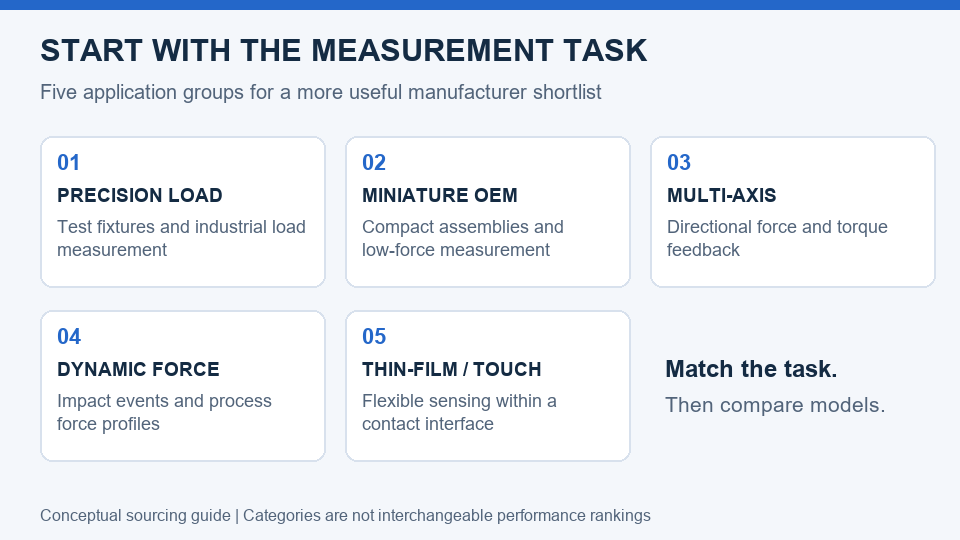
Figure 1. Shortlist manufacturers by the measurement task before comparing individual models.
· Precision Load Measurement and Industrial Testing
Start with Interface, HBK, or Transducer Techniques for conventional load cell-based test systems. Add WIKA, burster, or FIBOS when machine integration or a specific mechanical package is central to the project. Compare sensors at the same force range and with equivalent electronics and calibration coverage.
· Miniature Force Sensing for Medical and OEM Devices
FUTEK, SMD, TE Connectivity, and Honeywell provide different compact sensing approaches. FIBOS is another candidate for a miniature or custom mechanical configuration. Begin with available space and load introduction, then evaluate the exact sensor within your device’s electrical, environmental, and verification requirements.
· Multi-Axis Force/Torque Sensing for Robotics
ATI is a focused candidate for six-axis robotic force/torque measurement. FIBOS offers multi-axis product categories, while HBK and Kistler provide other force measurement options for test and process applications. Check the actual axes, moment capacity, interface, and controller compatibility; “multi-axis” alone does not establish a robot-ready package.
· Dynamic Force Measurement and Impact Testing
PCB Piezotronics and Kistler are relevant starting points for piezoelectric dynamic force measurement. Define pulse duration, frequency content, and observation time before discussing a sensor. Match the cable and signal conditioning to the selected technology, then verify the installed system against the intended event.
How to Evaluate Force Sensor Suppliers for U.S. Projects
· Force Range, Accuracy, Overload, and Mechanical Fit
State the normal working load, smallest useful force change, peak load, and loading direction. Specify whether the force is sustained or transient. Ask how accuracy is defined: nonlinearity, hysteresis, repeatability, and temperature effects are different quantities. Review allowable side loads and moments against the actual fixture drawing. A larger capacity can provide overload margin while making a small working signal harder to resolve.
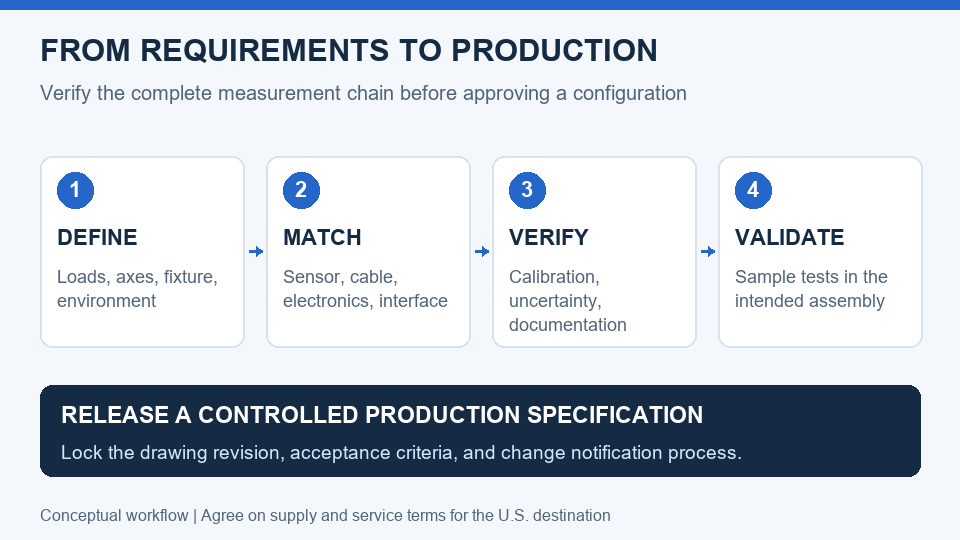
Figure 2. Define the measurement chain and validate a sample before releasing the production configuration.
· Calibration Traceability and Quality Documentation
Request a sample calibration report and define the required load points, directions, units, and uncertainty. Confirm whether calibration covers the sensor alone or the sensor with its readout. NIST explains that traceability concerns measurement results and a documented calibration chain; it is not blanket product certification. If accredited calibration is required, verify the laboratory’s current scope for the actual force range and method.
· U.S. Support, Lead Times, and Total Landed Cost
Separate sales presence from manufacturing location, inventory, and repair capability. Ask who handles technical questions, recalibration, returns, and replacement parts for your U.S. destination. Get written lead times for samples and production quantities. Compare the same delivery terms, including freight, insurance, import costs where applicable, and return shipping. An overseas factory quote and a domestic delivered package need to be compared on a common basis.
· Customization, MOQ, and Production Consistency
For a custom force sensor, agree on the drawing revision, acceptance criteria, development charges, minimum order quantity, and change notification process. Define which features are locked after sample approval. Before production release, evaluate representative samples using the intended fixture, electronics, and environment. Keep a controlled specification so that repeat orders are checked against the approved configuration rather than a general product description.
An effective RFQ includes the application, a drawing or CAD file, force range and direction, peak loads, accuracy definition, output, power supply, environmental conditions, required documentation, sample quantity, annual volume, U.S. delivery destination, and target schedule. Ask each supplier to identify any assumptions or exceptions in its response.
FAQs About Sourcing Force Sensors in the United States
1. Are All Manufacturers on This List Based in the United States?
No. This list includes U.S. and overseas manufacturers for U.S. buyers to evaluate. Headquarters, manufacturing origin, local sales, and local service are separate facts. Confirm the origin and support route for the specific product if your project has domestic sourcing requirements.
2. What Is the Difference Between a Force Sensor and a Load Cell?
“Force sensor” is a broad description. A load cell is a force transducer commonly used for load or weight measurement, and many manufacturers also use the term for tension/compression test sensors. Choose by measurement principle, loading direction, dynamics, and calibration requirements rather than the catalog label alone.
3. Can U.S. Buyers Order Custom Force Sensors From Overseas Manufacturers?
Yes, where the manufacturer accepts the project and applicable supply requirements can be met. Agree on specifications, sample approval, documentation, delivery terms, and return arrangements first. FIBOS is one overseas candidate with custom sensor products and a catalog that identifies the United States as an export market.
4. What Calibration Documents Should I Request From a Supplier?
Request a report identifying the device, measurement direction, applied loads, results, units, uncertainty, and traceability statement. Specify whether the readout must be included. If accredited calibration is part of your purchasing requirement, check the accreditation scope rather than relying only on a laboratory logo.
5. What Information Should I Include in a Force Sensor RFQ?
Include the application, installation drawing, load range and direction, overloads, required accuracy, output, environment, quantities, documentation, delivery destination, and schedule. For multi-axis measurement, add the required force and torque axes. Clear requirements help suppliers propose comparable configurations and expose integration work that a unit price alone will not show.