Non-contact dynamic torque sensor Product Description |
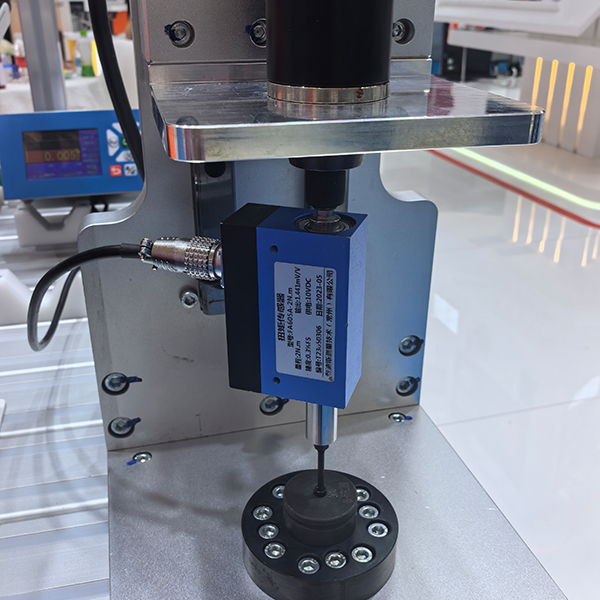
Contactless transmission;
Accurate and distortion-free;
High torsional rigidity with comprehensive overload protection;
Shaft-mounted design, compact structure, easy to handle and assemble;
Contactless, maintenance-free, with no service life limitations.
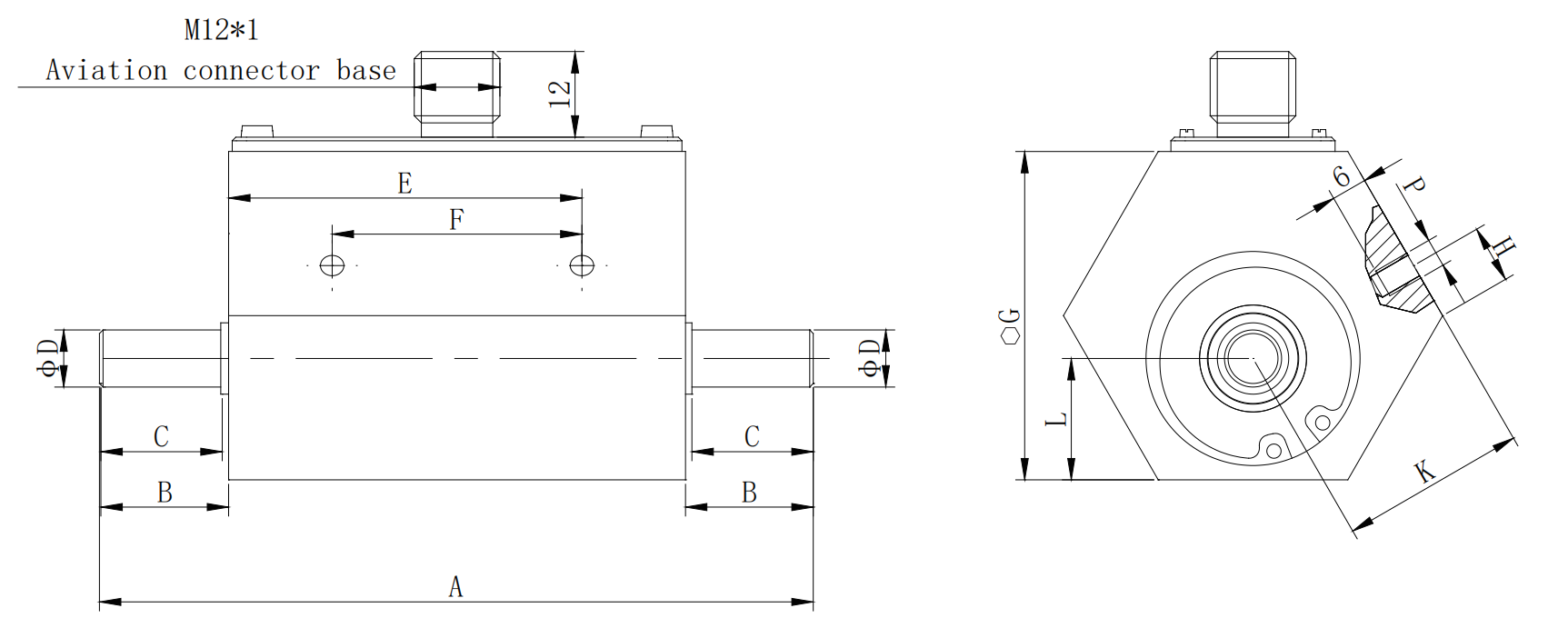
Non-contact dynamic torque sensor Dimensions(Unit:mm) |
![Non-contact dynamic torque sensor]()
| Rated torque(Nm) | Dimensions(mm) | Weight (kg) |
| A | B | C | φD | E | F | G | H | K | L | P |
| 0.2,0.5,1,2 | 100 | 18 | 17 | 8 | 49.5 | 35 | 46 | 8 | 26 | 17 | M4 | 0.4 |
| 5,10 | 100 | 18 | 17 | 10 | 49.5 | 35 | 46 | 8 | 26 | 17 | M4 | 0.4 |
| 20,50 | 140 | 30 | 29 | 18 | 60 | 40 | 65 | 15 | 34.8 | 28 | M5 | 1.1 |
| 100,200 | 160 | 40 | 39 | 22 | 60 | 40 | 65 | 15 | 34.8 | 28 | M5 | 1.3 |
Keyway dimensions
Note: Sensors with keyways should use these as a reference.
| Rated torque(Nm) | Keyway dimensions(L*W*D mm) | Recommended sliding key dimensions(L*W*H mm) |
0.2,0.5,1,2,5
| 14*2*1.2
| 14*2*2
|
| 10 | 14*3*1.8 | 14*3*3 |
| 20 | 14*6*3.5 | 14*6*6 |
50,100
| 30*6*3.5 | 30*6*6 |
| 200 | 36*10*5 | 36*10*8 |
Non-contact dynamic torque sensor Specifications |
Specifications | Technique |
| Capacity | 0.2,0.5,1,2,5,10,20,50,100,200Nm |
| Accuracy | 0.5%FS |
| Output signal | ±5VDC,±10VDC,RS485 |
| Supply voltage | 12~28VDC,24~28VDC |
| Max.power loss | ≤70mA |
| Max. working torque | 150%FS |
| Max. ultimate torque | 200%FS |
| Breakaway torque | 300%FS |
| Ambient temp. | -10~60°C |
| Ambient humidity | 0%~95%RH(No condensation, no dew formation) |
| Shell | 6061 Aluminium |
| Axis | LY12 aluminium (≤2 Nm); stainless steel (>2 Nm) |
| Anti-vibration | 10g(20...2000Hz) |
| Shock resistance | 500g/ms |
| Short-circuit protection | Permanent |
| Inverse pole protection | No damage, but not operational |
| Insulation resistance | ≥100MΩ 500VDC |
| Insulation strength | 500VAC |
Non-contact dynamic torque sensor Installation |
![Non-Contact Dynamic Torque Sensor (3)]() |
| Please fit a bearing between the coupling and the other components to support the housing. |
Sensor Styling Suggestions |
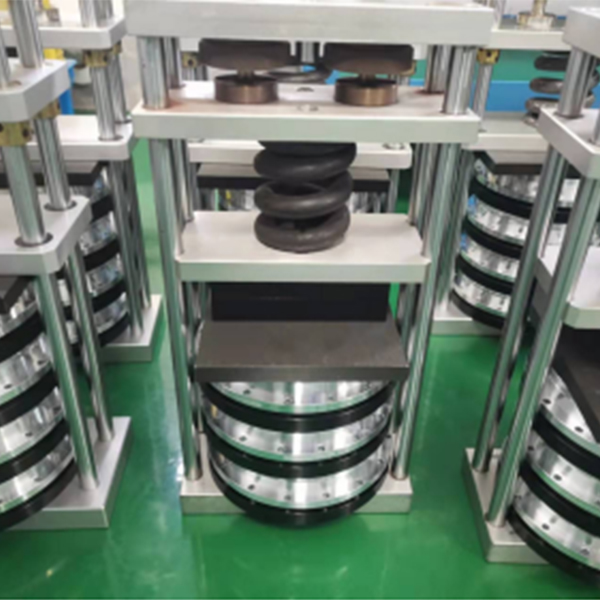
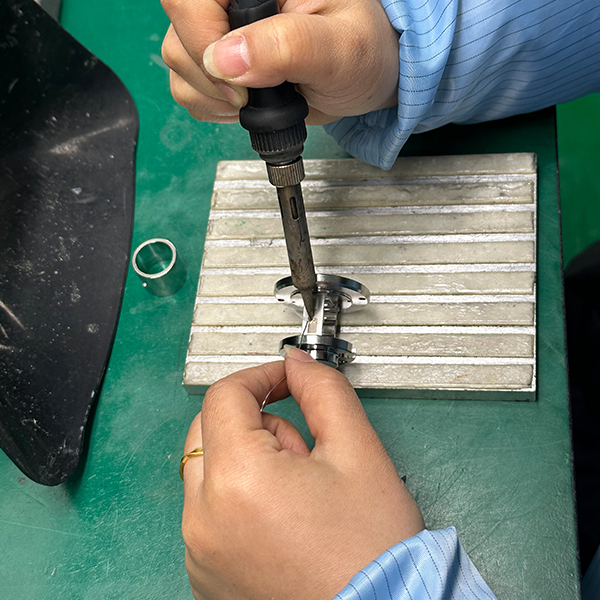
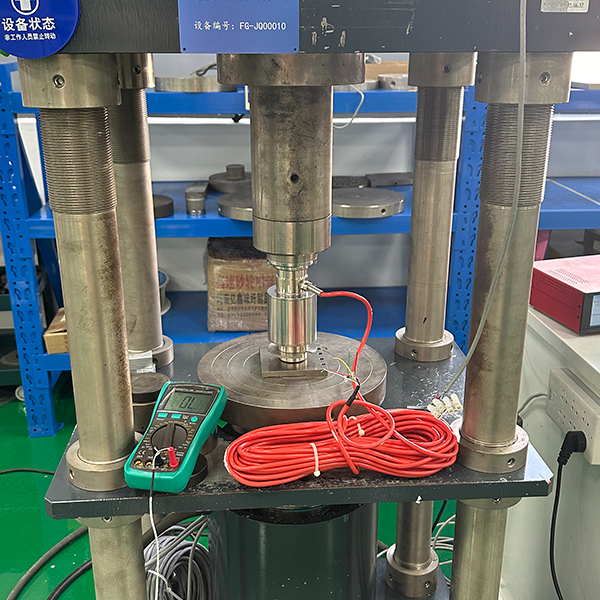
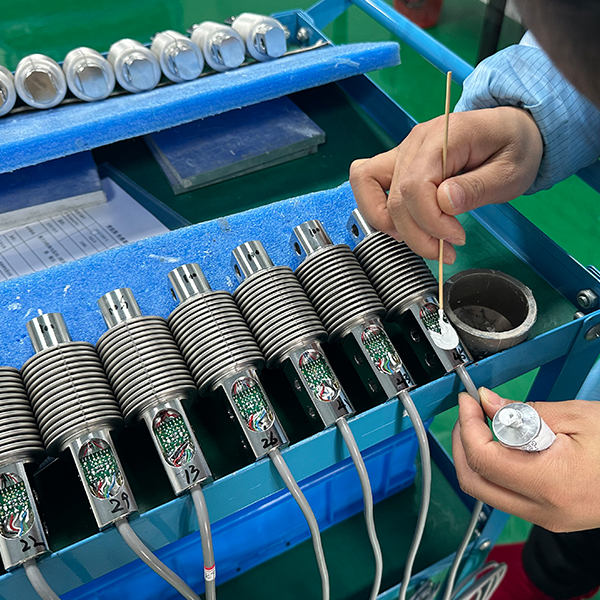
Force sensor manufacturing process |
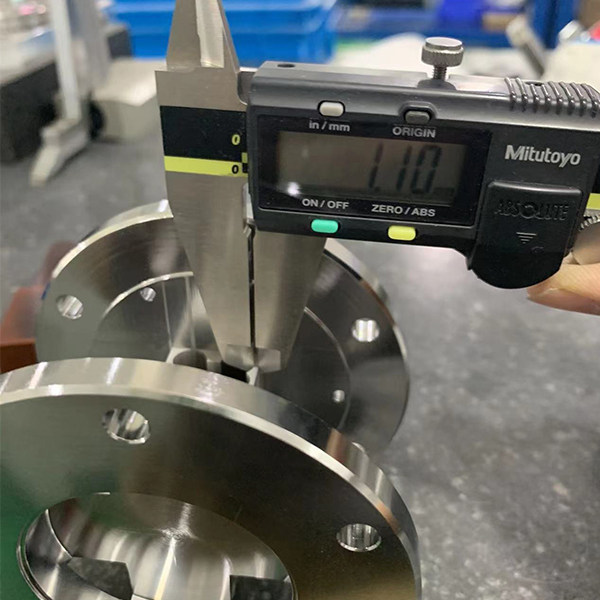
![Incoming Material Inspection]()
01 Incoming Material Inspection
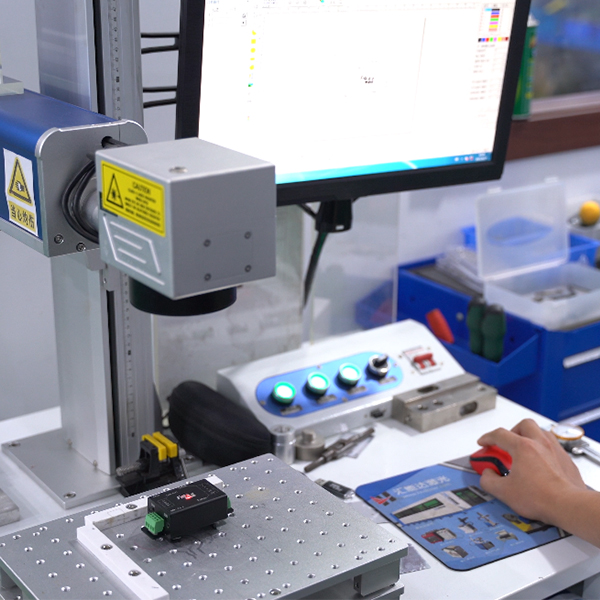
![Laser Marking]()
02 Laser Marking
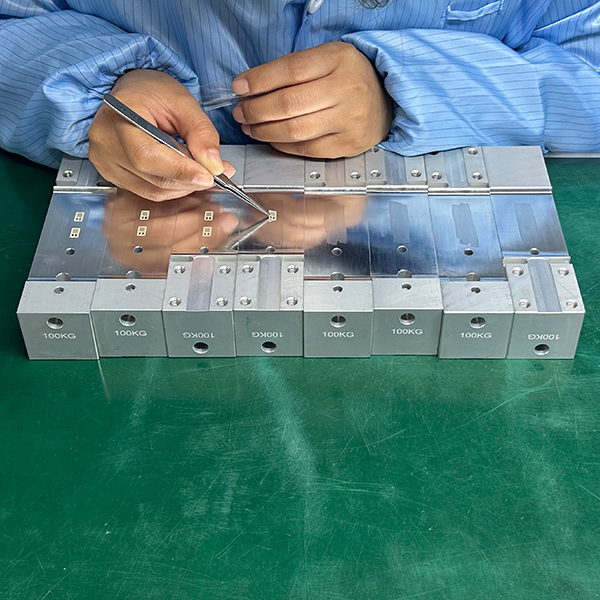
![Cleaning and Placement]()
03 Cleaning and Placement
![Pressure curing]()
04 Pressure curing
![Bridge Assembly Welding]()
05 Bridge Assembly Welding
![Test Compensation]()
06 Test Compensation
![Adhesive application and curing]()
07 Adhesive application and curing
![Laser welding]()
08 Laser welding
![Finished Product Re-testing]()
09 Finished Product Re-testing
![Cleaning and packaging]()
10 Cleaning and packaging
Sensor Non-standard customisation process |
![Non-Standard Customization Process]()
|
| Fibos possesses a professional technical team capable of developing customized products to meet specific client requirements. Our R&D cycle is seamlessly integrated with our in-house production lines, enabling us to deliver relevant products within a short timeframe. |
Customer case studies for the Torque series |
![Customer case studies for the Torque series (1)]()
Case Studies on Non-Contact Torque Applications
![Customer case studies for the Torque series (2)]()
Case Studies on Static Torque Applications
![Customer case studies for the Torque series (4)]()
Case Studies on Non-Contact Torque Applications
![Customer case studies for the Torque series (3)]()
Case Studies on Non-Contact Torque Applications
![Customer case studies for the Torque series (5)]()
Case Studies on Non-Contact Torque Applications
![Industrial Applications of Micro-Force Sensors]()
Industrial Applications of Micro-Force Sensors
![Industrial Applications of Micro-Force Sensors]()
Industrial Applications of Micro-Force Sensors
![Industrial Applications of Micro-Force Sensors]()
Industrial Applications of Micro-Force Sensors
Frequently Asked Questions about dynamic torque sensor |
Q1: What is a dynamic rotary torque sensor?
A: A dynamic rotary torque sensor is designed to measure the torque generated by rotating shafts in real time. It can simultaneously monitor torque, rotational speed, and mechanical power, making it suitable for motors, gearboxes, pumps, test benches, and industrial automation systems.
Q2: What applications are dynamic torque sensors used for?
A:
Dynamic rotary torque sensors are widely used in:
Electric motor testing
Servo motor performance evaluation
Gearbox efficiency testing
Industrial automation equipment
Robotics
Automotive transmission testing
Pump and fan performance testing
Engine dynamometers
New energy equipment
Research laboratories.
Q3: Can the sensor measure torque while rotating?
A: Yes. Unlike static torque sensors, dynamic rotary torque sensors are specifically designed to measure torque continuously during shaft rotation with high accuracy and excellent repeatability.
Q4: What output signals are available?
A:The FA640 supports multiple output options, including:
Other customized output interfaces may also be available depending on project requirements.
Q5: Can the sensor measure rotational speed?
A:Yes.
The dynamic torque sensor can simultaneously measure:
This makes it ideal for complete drivetrain performance analysis.
Q6: How should the sensor be installed?
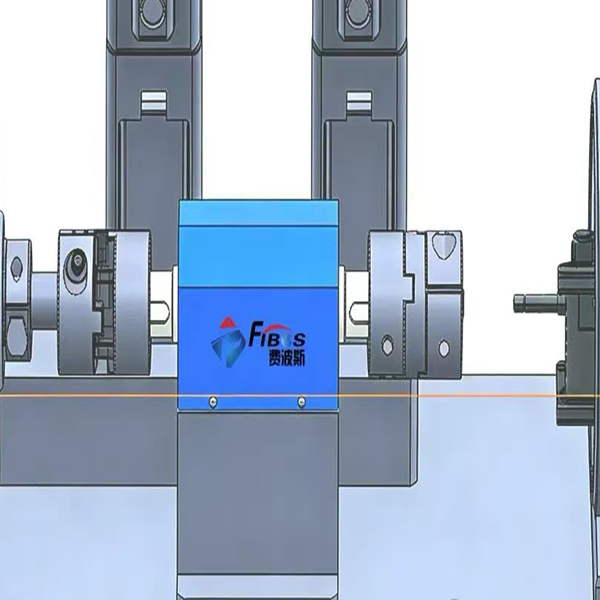
A:The sensor should be installed between the driving equipment and the driven equipment using appropriate shaft couplings.
For best performance:
Ensure accurate shaft alignment.
Use flexible couplings to reduce vibration.
Install support bearings when necessary.
Avoid excessive radial or axial loads.





 to facilitate your design of workpiece.